Written by Dr. Brown
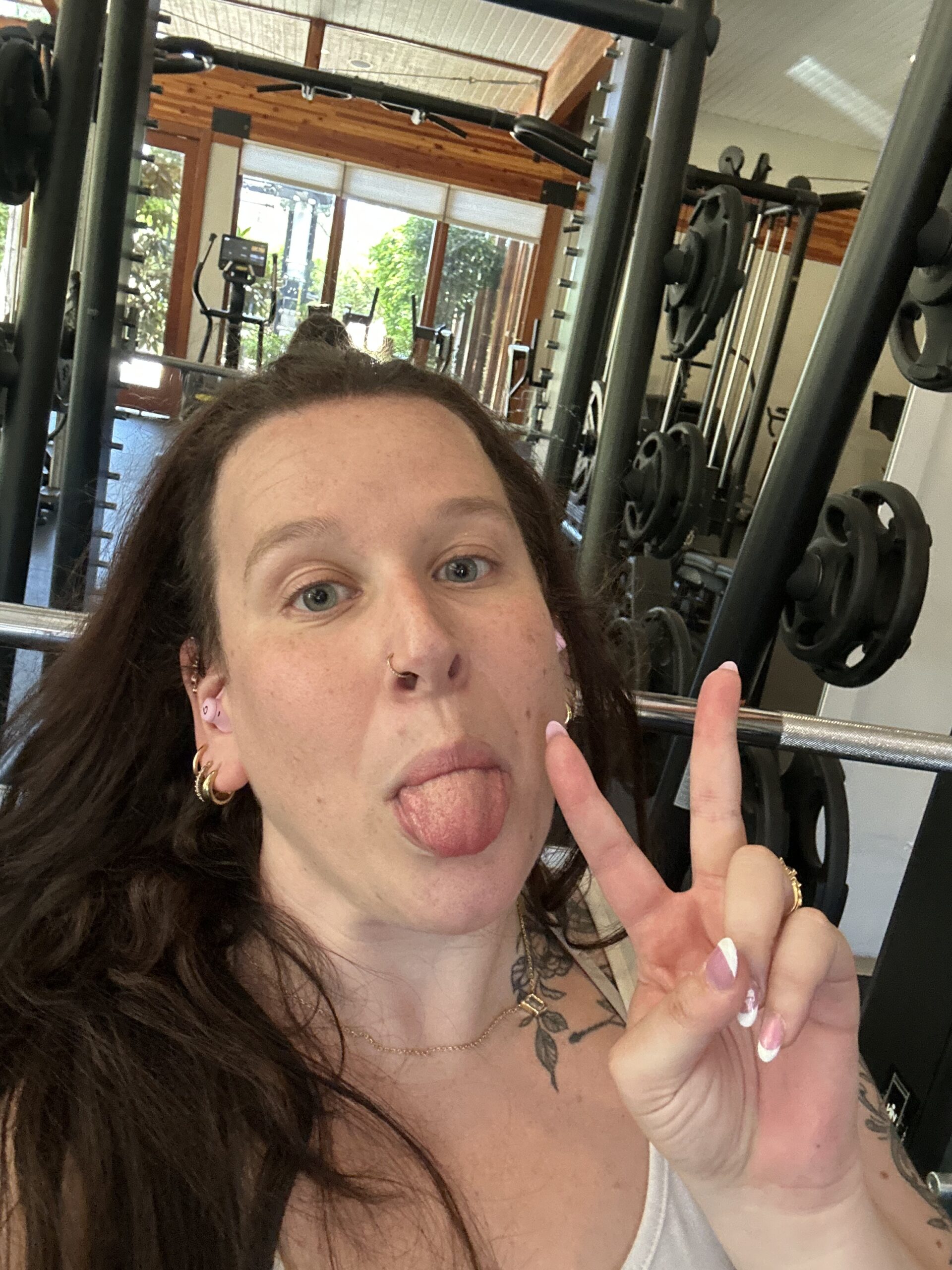
Several months ago, I handed my health over to my employees.
Not literally. They were not allowed to lock me in a wellness dungeon and force-feed me supplements. But I did agree to spend six months following their recommendations without arguing, modifying the plan, or deciding that I knew better.
If you read my three-month update, you know this was harder for me than it sounds.
At the beginning, I was regularly using naturopathic medicine, personal training, Pilates, yoga, Reiki, and wellness hypnotherapy. I also explored nutrigenomics testing, sound healing, past-life regression, and Beyond Quantum Healing.
I had one set of goals. My employees had another.
I wanted consistent habits and relief from some of the hormonal issues I had been dealing with. My employees were almost entirely focused on slowing me down and making my life more sustainable.
Under normal circumstances, I would have fought them much harder on that.
Thankfully, I had agreed to listen.
I Thought I Needed More Discipline. They Thought I Needed Less Intensity.
My problem has never been knowing what is good for me.
Before this experiment, I already exercised, paid attention to nutrition, worked on my mental health, and knew more about wellness than any one person probably needs to know. I own a wellness company for goodness sakes.
My problem was that I approached healthy habits with the same energy I bring to most things: go hard, do everything, and become excellent immediately. This energy works beautifully until it doesn’t.
I would maintain an intense routine for about three months, burn myself out, stop for two months, and eventually start the entire cycle again. I thought my inconsistency meant I needed to try harder (even though I literally started a company about BALANCE ). My team recognized that trying so hard was part of the problem.
So they started me off painfully slowly.
That slower pace did more than prevent burnout. It gave them enough room to notice weaknesses and patterns that even I had missed.
Gina, my Pilates instructor, identified that my lower abdominal muscles were not doing their share of the work. My hip flexors were compensating, which was affecting my movement and contributing to my chronic pain. She gave me regressions and targeted exercises that allowed me to feel the difference for the first time.
That was humbling, to say the least. Everywhere I read about how people need to strengthen their hip flexors and become more flexible, and I unintentionally created a whole different problem for myself. Reminds me of the part of the journey where Ann told me I was actually hurting myself by drinking too much water.
I had been used to measuring progress by how hard I worked, how much weight I lifted, or how exhausted I felt afterward. Suddenly, progress looked like making a smaller movement correctly and learning which muscles were actually supposed to be doing the job.
David helped me build strength without recreating my usual cycle of overdoing it. Vidhi supported me through regular yoga, while a few early sessions with Iesha focused on slower movement and nervous-system regulation.
The details were small. The impact was not.
The Parts of Health That Are Harder to Measure
I began the six months with several rounds of wellness hypnotherapy with Allie, largely focused on balance and burnout prevention. Later, I completed individual past-life regression and Beyond Quantum Healing sessions.
These experiences created space to explore a part of myself I had not been paying much attention to. After the Beyond Quantum Healing session, I began spiritual coaching with Allie because I felt like I was getting in touch with something important that I had lost to my perfectionism. That work was still developing when a family emergency happened, and I quickly put it on pause.
It is not forgotten. It is still in the forefront of my mind, waiting for a time when I have the capacity to return to it. That, too, is part of sustainable health. Something can matter without needing to become one more thing you force yourself to do immediately.
Then Life Actually Tested the Plan
My original experiment officially ended on August 19. But by then, I had already stopped giving regular updates because life had taken a sharp turn.
A family medical emergency at the beginning of July put me in an ICU for three weeks, often for about 12 hours a day. Even after I left, I was emotionally coping with everything that had happened until the end of August.
This was not a controlled test of my new habits. This was real life. It was also exactly the kind of situation that would have completely derailed me before.
In the past, I likely would have stopped taking care of myself, felt guilty every minute I was not working, and then expected myself to snap immediately back into my full routine when the crisis ended. Once I inevitably failed to do that, I would have treated the entire thing as proof that I had fallen off track.
Instead, I ordered salads to the hospital. I prepared meals where I was staying and brought them with me. I took walks every day to clear my head. I did not drink alcohol. I did not gain stress weight, and my acne did not flare.
I also did something that may have been more difficult for me than any workout: I missed work without drowning in guilt. I trusted other people to have my back and really deeply internalized that this was the time I needed to prioritize myself.
I wish I could say I continued every healthy habit perfectly while sitting in an ICU for 12 hours a day. Obviously, I did not. I stopped all of my structured routines because there was an emergency happening. But I did not abandon myself. That is the difference.
Within about four weeks of returning home, I had returned to approximately 80 percent of my normal routine. More importantly, I did not have to rebuild from zero.
My strength and balance continued improving before the emergency, then remained largely stable during my time away. My weight and inflammation have also remained stable since my last update. My IBS is regulated. My sleep is now remarkably consistent outside of normal interruptions. Most of the hormonal improvements have held, and my acne is regulated again, although I do still have a separate skin issue that concerns me and needs attention.
My scoliosis pain is flaring again. The difference is that I am not confused about why. I know which muscles need to be rebuilt. I know that I need to practice the posture corrections again. I know that my sleeping position was contributing, and I changed it a couple of weeks ago. A symptom returning no longer automatically means the whole plan failed. Sometimes it means I have useful information and know what to do next.
The Outcome I Never Expected
A significant amount of my physical difficulty began after a zip-lining accident in 2021. Afterward, I lost a great deal of balance and mobility and spent about a year unable to walk normally. I also stopped doing many of the physical things I loved, including dancing.
For years, I could not stand on my tiptoes. My ankles did not feel reliable. My balance, flexibility, and core strength were not where they needed to be. Returning to dance did not feel realistic.
Now, I am preparing to go back. I am not claiming that I have completed some triumphant comeback montage. I have not returned fully yet. But my ankles, balance, flexibility, and core finally feel ready to begin again. I am doing stretches and training exercises from back in 2020.
The possibility of a legitimate return means more to me than a number on a scale ever could.
So, Did Letting My Employees Take Over My Health Work?
Yes, but not because I became perfectly disciplined. It worked because when my life became unmanageable, I did not completely disappear from my own life.
At the three-month mark, I wrote that I was still worried my progress might be a fluke. I had recovered from a depressive period in two weeks instead of disappearing for my usual two months, but I did not know whether the slower foundation would hold under greater pressure.
Then it faced much greater pressure.
The habits bent. They became smaller. Some disappeared temporarily. But the foundation did not collapse.
That is what my employees understood before I did: a health plan should not only work when you have plenty of time, motivation, energy, and emotional bandwidth. It needs to have somewhere to go when life gets hard.
Sometimes that means completing the workout. Sometimes it means touching the weight for two minutes. Sometimes it means ordering a salad to an ICU because preparing the perfect meal is not remotely realistic. And sometimes it means putting an important goal down without deciding you have abandoned it forever.
I began this experiment wanting more consistency and fewer hormonal symptoms. I got both. But the more important result was learning that sustainable health is not built by never falling off track.
It is built by creating a track you can actually find your way back to.
If you recognize yourself in my cycle of going all in, burning out, and starting over, you probably do not need someone to give you another list of healthy things you already know you “should” be doing. You may need help building a plan that accounts for your body, your nervous system, your responsibilities, and your actual life.
That is the kind of work our Balance & Birch providers do. You can learn more about our membership options or explore individual services without committing to someone else taking over your entire life for six months.
I already volunteered for that part.