
By David Kopp
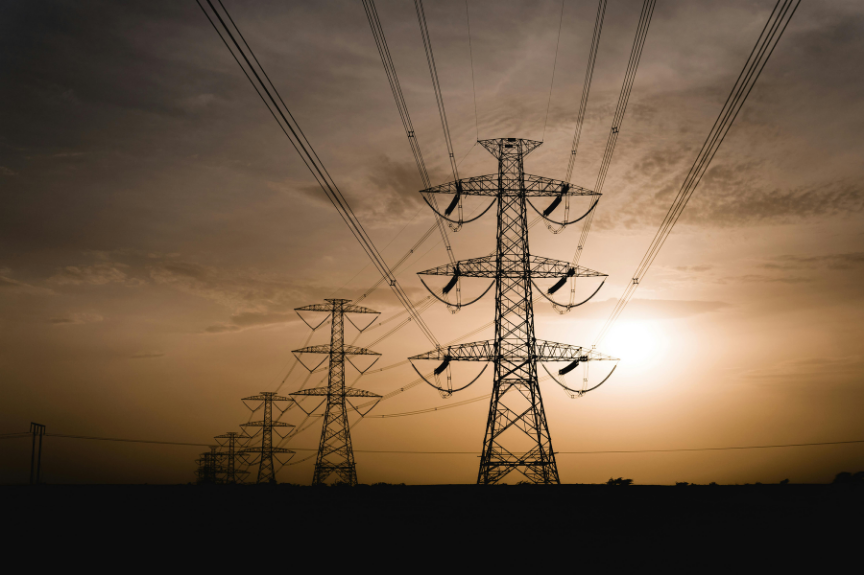
The situation surrounding the power grid in the United States has gained substantial attention. It has resonated with millions of Americans and caused a great deal of concern. However, much of the reporting regarding the power grid has been lacking pertinent nuance. The vast majority of coverage of the power grid has effectively put the masses in an anticipatory state of a blackout. Yet it has provided little information on what a blackout entails, what to do in the event of a blackout, or the likelihood that a blackout will occur. This article has three goals. First, it will identify real vulnerabilities in the power grid. Second, it will identify and remove the sociological insulation the United States has become accustomed to in order to better navigate the ramifications of a blackout event. Third, it will identify countries and populations that not only lived through blackouts but continued to grow despite them!
The vulnerabilities the power grid faces include a cyber or physical attack, outdated transformers, manufacturing bottlenecks, and severe weather events. Starting with physical attacks, power substations often sit in remote areas with minimal security. This makes them soft targets that could cause widespread damage if attacked. If a foreign or domestic adversary wanted to target them, they could inflict significant damage with little to no effort. It may seem as though many adversaries would be keen on taking advantage of these vulnerabilities. But that would ignore deterrence, a subject that will be further explained after we identify the cyber threat facing the power grid.
The United States imports a significant number of logic components from other countries. This creates a risk that some components could contain malware or hidden remote-access capabilities. This presents a significant cybersecurity threat. So with all these vulnerabilities, why doesn’t anyone capitalize on an attack? An attack on the United States power grid could be devastating. However, adversaries of the United States have several deterrents, including nuclear deterrence. The United States’ defense posture is not exclusive to the physical borders of the United States. There are over 750 military installations worldwide. This means that an isolated attack would not be effective in preventing the United States from retaliating. It would take a coalition, coordinated efforts, and planning. This would raise an adversary’s risk of being compromised by an intelligence agency. An adversary would risk retaliation from both the United States and the global community. Deliberately attacking civilian infrastructure can constitute a war crime. However, infrastructure used for military purposes may sometimes be considered a lawful target. A major attack could also lead NATO to consider invoking Article 5. It states that an armed attack against one ally is considered an attack against all 32 allies. If that hasn’t imposed enough deterrence, the sea-based arm of the nuclear triad would be unaffected. The United States could consider nuclear use in extreme circumstances because its policy does not categorically rule out first use. One may ask: with all of these deterrents, why doesn’t the United States just target the adversaries capable of threatening our power grid? It’s simple: our adversaries have the same deterrence we do. The reason for this portion is not to carry water for mutually assured destruction. It is to clearly state that engaging in a physical attack or cyberattack against anyone is not as simple as logging onto a computer and activating malicious software. Regardless of what most mainstream outlets will say, engaging in an attack against a power grid would be shortsighted. The juice would not be worth the squeeze.
The second vulnerability that will be discussed is the condition of aging transformers. A transformer is a static electrical device. It changes the voltage of alternating current electricity so it can safely travel across the power grid. About 70 percent of large power transformers are at least 25 years old. However, age alone does not mean they are obsolete. Replacement timelines vary, with some transformer orders taking more than a year. Large specialized transformers can take several years. If a large transformer fails, an affected area could experience a lengthy localized blackout when no spare is available. However, the damage would be limited to the affected area. It would not necessarily become a nationwide security concern. The overextension of transformers leads us right to our next vulnerability–bottlenecks in supply chains and manufacturing. A bottleneck is a point of congestion where the volume of work exceeds the capacity for construction, resulting in a decrease of productivity. This could cause a localized blackout. It could also delay repairs. Because these problems are connected, both can be addressed by incentivizing people to work in precision machining and electrical engineering. Incentives have influenced career choices before, especially when demand for workers was high! These career fields can be lucrative. Working in them can also serve a nation in need.
The final vulnerability we will cover is extreme weather events. During a severe weather event, your immediate safety should be the priority. We will list the weather conditions that pose risk to the grid while avoiding the overexplanation of what takes place during those specific events. In the event of a hurricane, tornado, or other high-wind storm, power lines can snap. Debris can also block roads, delaying repairs. Extreme heat can increase electricity demand for air conditioning. It can also reduce the efficiency of power lines and transformers. Likewise, extreme cold weather can also pose a threat by causing important piping to freeze or in some cases burst. Weather events such as wildfires, flooding, and droughts can also lead to vulnerabilities, though they are far less common than the examples listed above.
With all these different vulnerabilities in mind, it’s no wonder why many people in the United States find themselves in a state of disarray. They are becoming more aware of the state of the power grid. However, an important thing to take into consideration is that the idea that the power grid was ever secure is a facade. The vast majority of these vulnerabilities have always existed. In spite of them, the power has consistently stayed on. In the major blackout instances we have already experienced, power was often back on within a single week. This stellar record has led many Americans to assume that electricity will never go away, and therefore they have lived their lives accordingly. Approximately 655 million people live without electricity, and millions more live with limited or unreliable power. Nations like Cuba have been forced to ration electricity to prioritize medical care over civilian use. Yet Cuba still experiences occasional nationwide blackouts. Despite this reality, Cuba sits at the cutting edge of the medical field, especially when responding to natural disasters. It has sent teams of doctors worldwide to aid those in crisis. The Cubans have effectively demonstrated the overarching lesson that access to power does not determine a society’s ability to survive–their willingness to engage in community does. The fear that society will plummet into a real-life version of “The Purge” is understandable, and I will not try to convince you otherwise. However, in order for that to be true it would mean that every single person afflicted by the blackout would have to suspend their morality, their instinct to have empathy, their desire for cooperation, and their hope that they can be responsible for a better tomorrow. The human condition has been tested and tried for many millennia. Yet all people from all walks of life have become more intertwined today than they have ever been before. Regardless of our obstacles, humanity has not only adapted; we’ve thrived. We are never alone on the global stage. But if you are feeling alone in your local community when you contemplate the power grid, that may be your subconscious urging you to engage in building a more close-knit community! It would be incredibly challenging for one person to go it alone in a time of crisis. But when people come together and form a community, time has proven that it can withstand almost anything the universe can muster. Engaging in community gives you the opportunity to decompress. It also helps you plan for what you would do in the event of a crisis. Like all plans, it may at first seem futile, but the more time and effort you invest in it, the more faith you will have! The harsh reality is that electricity is not guaranteed, and it never has been. Living in the expectation that there will always be power may leave you in a tough spot in the event of a blackout, or give you a sense of anxiety when that expectation is challenged, as it has been recently. But what is guaranteed is that when people come together in a time of need and form a community, the vast majority of those involved will always do what is right.
Nations like Cuba, Pakistan, Lebanon, Nigeria, and South Africa, as well as other rural and impoverished areas have endured frequent blackouts or scheduled load shedding. They have shown us that it is possible to endure. This does not mean the experience is painless, but pain is often relative to our circumstances. These societies endured natural disasters, energy insecurity, and in some cases poverty. Yet they still have vibrant cultures, communities, and a sense of belonging. Learning how these societies survived through hardship could both enlighten and encourage us in our own lives. Hope will always be on the side of humanity because when like minds come together for a common cause, there is nothing we can’t do.