Written by Gina Vitale
It’s Autumn, and it feels crisp outside. November brings darker mornings, chilly evenings, and a deeply rooted desire to dig up your favorite soup recipes. Whether that’s good news or bad for you, there’s reason to consider a seasonal shift to support your health.
What if a few modifications to your typical self-care practices helped your body embrace Autumn? Instead of fighting weather and energy changes, you can adjust your routines to navigate this season with purpose and alignment. We’ve provided a guide for tuning your self-care routine for November.
Navigating the Daylight Shift
Daylight saving time is more than an inconvenience; it’s a biological disruption. There’s actual science behind low energy levels when it’s darker in the morning and earlier in the evening.
Your circadian rhythms — your body’s internal 24-hour clock coordinating behavior, sleep/wake cycles, and overall body functions — are influenced by environmental light; therefore, changes in the amount of daylight you experience affect how you feel.
Here are 2 evidence-based self-care tips you can try to help yourself through the Autumn time shift:
- Aim for 30 minutes of bright light exposure with an evening walk outside or using bright light therapy inside.
- Wear dark sunglasses (category 3) for 1 hour in the morning for 4 days following setting clocks back.
It’s worth noting that research indicates those managing chronic mental illness are more vulnerable to time changes. Large-scale population studies show that daytime natural light exposure positively affects mental health, though further research is needed.
Cozy Fitness Tips for Cooler Temps
When the air feels cooler, you may crave cuddling with blankets more than exercise. Mobility-wise, cold weather can make your muscles and joints feel stiff, but that likely comes from holding more tension and moving less than you did in the warmer months. Scientifically speaking, the verdict on a direct correlation is still out. One study of older adults with arthritis found that seasonal changes and time of day affected joint mobility, but it measured only a specific group.
That being said, you may want to change how you approach movement and exercise when the temps drop to minimize injuries.
- Muscles take longer to warm up in cold weather. If you’re typically an outdoor exerciser, e.g., running or walking, take an extra 5 minutes and add a dynamic warm-up before you head out.
- Mix up your workouts to boost indoor cardio by adding in HIIT (high-intensity interval training). Elevate your heart rate with 40-second bouts of activity (and 20 sec rest) that include resistance training with kettlebells, dumbbells, or bands.
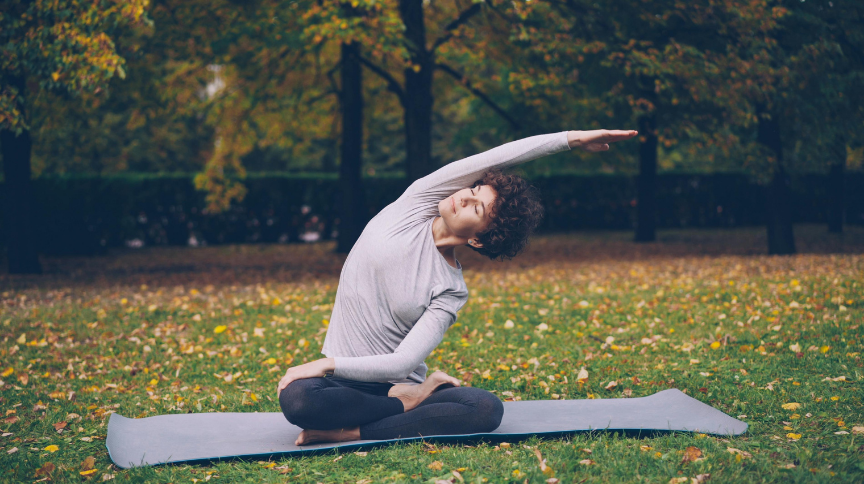
- Build internal heat with a 20-minute Pilates and/or yoga session.
- A quick 5-minute mobility session after waking up to work out morning stiffness with cat-cows, pelvic clocks and tilts, knee rocks/lower trunk rotation, and knee-to-chest stretching.
So don’t hibernate under your toasty blankets; modify your activity level or exercise routine to support yourself (and your health) through the chill. Grumbling about dwindling thermometer numbers won’t keep you cozy; instead, create your own heat with simple activities.
The Art of Self-Soothing Your Nervous System
Autumn’s shorter, cooler days may cause you to feel tired earlier. This time of year brings a full social calendar, which may mean you have to be “on” more than you prefer. Fall festivals, “friends”-giving, Thanksgiving, work parties, etc., by the end of the month, you may be running on fumes.
Here are a few self-care ideas to help you manage stress and soothe your nervous system during this festive season. Fun fact: specific breathing techniques can reduce stress and anxiety and improve your mood in the short term.
- Box breathing is a method Navy SEALs use to control their reactions during extraordinary events.
- Inhale slowly for 4 seconds (breathe in through your nose).
- Hold your breath for 4 seconds.
- Exhale slowly for 4 seconds (breathe out through your mouth or nose).
- Hold empty for 4 seconds before starting the next breath.
- Repeat for 5 minutes.
- Cyclic (physiological) sighs are reportedly the most effective way to calm your nervous system.
- Inhale deeply through your nose to fill most of your lungs.
- Inhale again, taking a second, short, sharp “top-up” through your nose to fully expand and fully inflate your lungs.
- Exhale slowly and completely all the air out through your mouth with an audible sigh.
- Repeat this sequence continuously for 5 minutes.
- Research indicates mindfulness and meditation benefit your mental and physical health by boosting stress resilience, reducing anxiety, and improving emotional regulation. These practices may be a healthy addition to your long-term self-care strategy.
Remember to take a time-out when you need it. Intentionally rest your mind (and eyes from your phone) for 5 minutes, away from noise and distractions, and just breathe and be.
Nourishing the Gut-Immune Connection: Autumn Whole Foods & Warmth
Who doesn’t crave comfort food when it’s chilly outside? A steamy bowl of veggie noodle soup just hits different in November than in June—and there is real science behind that craving!
Your gut microbiome (the complex ecosystem in your gut) communicates constantly with your brain. What you crave as the seasons change is driven by a natural mix of biology, brain chemistry, and evolution.
When outside temperatures drop, your body uses extra energy just to stay warm. Eating helps! The process of digesting food and absorbing nutrients creates a mild internal heat known as diet-induced thermogenesis.
Choosing warm, nutrient-dense foods doesn’t just warm you up from the inside out—it directly supports your gut health. Studies show that our gut bacteria naturally shift with the seasons based on temperature, daylight, and dietary changes. Because your gut houses a huge portion of your immune system, supporting your digestive microbiome with seasonal, prebiotic-rich foods is key to staying resilient all winter long.
Support your gut-immune health in Autumn using these 3 self-care tips:
- Embrace warm, cooked foods: Swap cold raw salads and ice water for roasted squashes, root vegetables, slow-cooked grains, and hearty broths that nourish gut microbiota and support cold-season immunity.
- Prebiotic seasonal powerhouses: Choose gut-supporting seasonal ingredients rich in antioxidants and fiber, such as pumpkin, dark leafy greens, cranberries, and apples.
- Hydration with a warm twist: Cold weather dampens thirst signals, making autumn dehydration surprisingly common. Keep a warm mug of spiced golden milk, lemon water, or herbal tea at your desk throughout the day.
Sustainable Boundaries: Protecting Your Energy & Social Battery
Tis the season to be invited to gatherings. It feels wonderful to be thoughtfully considered, but you cannot always say yes. Never mind the guilt or FOMO; protecting your peace is non-negotiable, otherwise you risk metaphorically and spiritually limping into the new year.
These 3 self-care tips focus on healthy boundaries and avoiding social burnout:
- Practice gracious “no” scripts. Prepare simple, gentle phrases to turn down non-essential commitments without guilt.
- Schedule “white space” on your calendar. Block out “me time” on your digital calendar to ensure you have breathing room between work and social obligations.
- Protect your health-promoting routines. Keep 1 or 2 small daily anchor habits—whether it’s your morning walk or a 10-minute bedtime stretch—sacred no matter how busy the schedule gets.
Meeting up with friends and joining social events is food for the soul, but not at the expense of other routines that support your daily health. It is ok to say no. Choose your outings wisely, and plan your week so you can support your health and hang with your favorite people.
November self-care doesn’t have to be complicated. Helping yourself adjust to time changes and energy shifts, while protecting your peace, sets you up for seasonal success. What’s 1 simple modification you plan to make today for self-care support as November rolls in? Now, mark it on your calendar!